
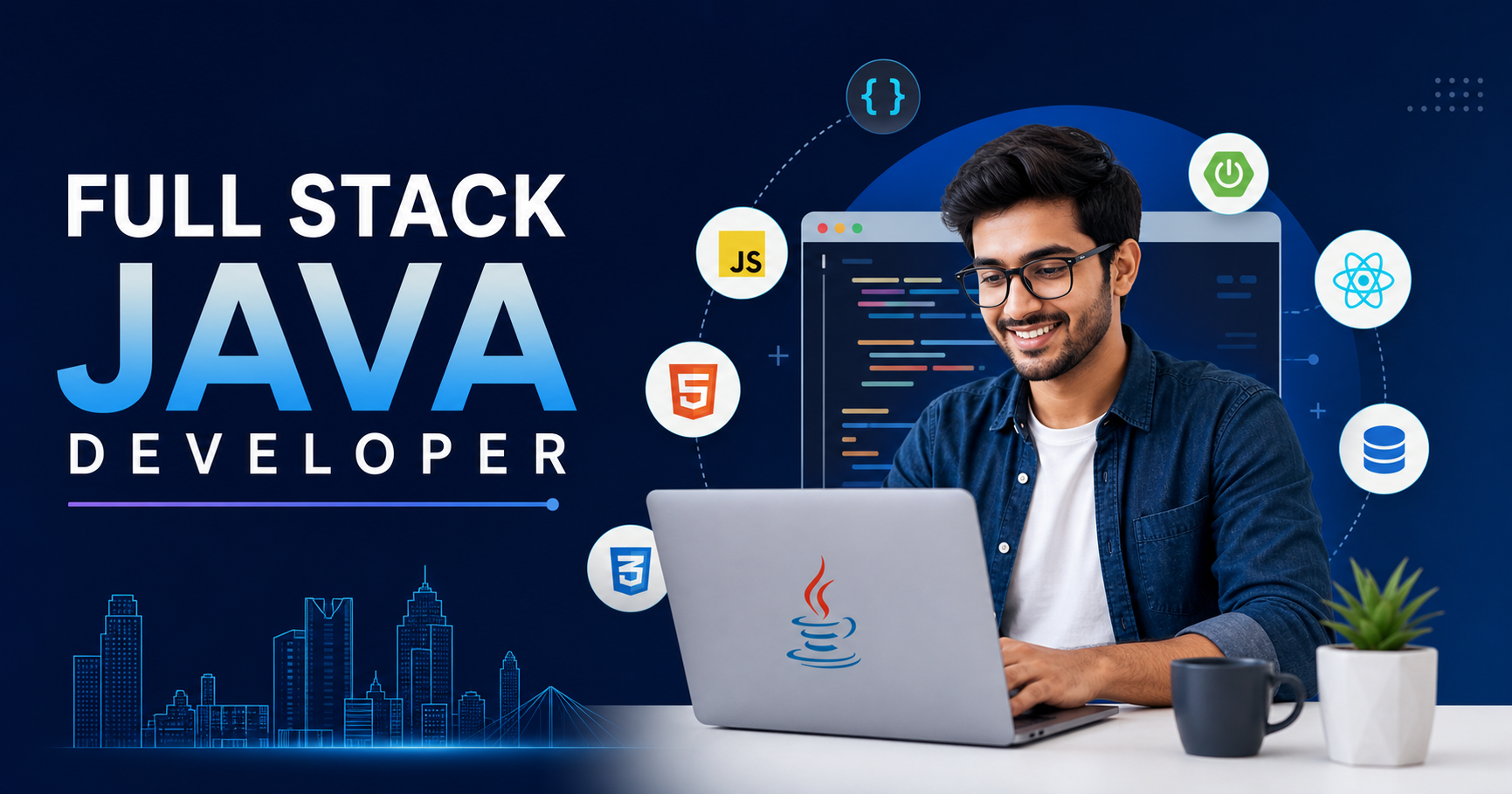
The Complete Guide to Becoming a Full Stack Java Developer in 2026
Full Stack Java Development is a high-demand career where you build both frontend and backend applications. By learning Java, Spring Boot, frontend technologies, and working on projects, you can become job-ready and apply for roles like Full Stack Developer or Software Engineer.

Introduction
If you want to build a career in Information Technology taking a Full Stack Java Course at IT Shaala is a very good idea. Many people who are just starting out feel confused about where to start and what to learn. They also do not know how to get a job.
In the few years Full Stack development has become one of the most popular career paths. This is because companies like to hire people who can do both frontend and backend development.
If you learn Full Stack development you will have a chance of getting a job in places like Pune. You should learn in a way to become a good developer.
What is Full Stack Java Development
Full Stack Java development means building web applications using Java. You use Java for all parts of development.
This includes:
Frontend, which is the part that users see: HTML, CSS, JavaScript, React
Backend, which's the part that users do not see: Java, Spring Boot
Database: MySQL or MongoDB
A Full Stack developer can do everything from designing what the user sees to managing the backend and databases.
This makes Full Stack developers very valuable to companies.
Why It’s in High Demand
Today companies like to hire people who can:
Work with different technologies
Build applications that are fast and efficient
Work well in teams
of hiring separate people for frontend and backend companies hire Full Stack developers to save time and money.
If you are looking for a Java training program Full Stack Java is a choice for a long and successful career.
Skills Required
To become a job-ready developer, you need a balanced mix of technical and practical skills.
To become a developer you need to have a mix of technical and practical skills.
Core Skills
Java basics
Object-Oriented Programming
Exception handling
Backend Skills
Spring Boot
REST API development
Database connectivity
Frontend Skills
HTML, CSS
JavaScript
React basics
Additional Skills
Git & GitHub
Debugging
Problem-solving
Learning these skills in a way will help you become a good developer.
Step-by-Step Learning Path
Having a plan will help you stay focused and avoid confusion.
Step 1: Learn Java basics
Start with the basics like loops, arrays and Object-Oriented Programming. These are important for topics.
Step 2: Learn Advanced Java
Learn about JDBC, Servlets and backend concepts. This will help you understand how applications work with databases.
Step 3: Master Spring Boot
Spring Boot is very important for backend development. Focus on building REST APIs and understanding how applications are structured.
Step 4: Learn Frontend
Start with HTML, CSS and JavaScript. Then learn about frameworks like React for building user interfaces.
Step 5: Build Real Projects
Building projects is the important part of learning.
Some examples of projects you can build are:
Login and authentication systems
CRUD applications
E-commerce platforms
Tools & Technologies
You should know about these tools to work effectively:
IntelliJ
Eclipse
VS Code
GitHub
Postman
MySQL Workbench
These tools are used in the industry. Will help you work faster.
Career Opportunities
After you finish your training you can apply for jobs like:
Stack Java Developer
Backend Developer
Software Engineer
Web Developer
Many companies today care more about your skills and experience than your degree. This is especially true if you learned through a program.
Smart Learning Tip
Many students struggle because they do not have a plan.
To learn faster:
Practice coding every day
Focus on the basics
Build projects regularly
Do not jump between technologies
You can also read about mistakes that stop people from getting a job to avoid making those mistakes.
Conclusion
Full Stack Java development is not a course it is a career path that offers long-term growth and stability.
With a plan consistent practice and real-world project experience you can become a good developer and confidently enter the IT industry.
If you are serious about starting your journey look at the programs on the IT Shaala official website. They offer training, real-time projects and placement-focused guidance.
FAQs
Q1. Is Stack Java good for beginners?
Yes beginners can learn it with guidance and a plan.
Q2. How long does it take to learn Full Stack Java?
It usually takes 4-6 months with daily practice.
Q3. Do I need a degree to become a developer?
No most companies care about your skills and project experience.
Q4. Is Java still in demand, in 2026?
Yes Java is still one of the widely used programming languages.
Q5. What salary can a new developer expect?
New developers can expect around ₹2.5 to ₹5 LPA depending on their skills and projects.
Level up your tech career
Did you find this article helpful? Join IT Shaala's advanced bootcamps to build real-world applications and land your dream job.
Explore Our Courses