
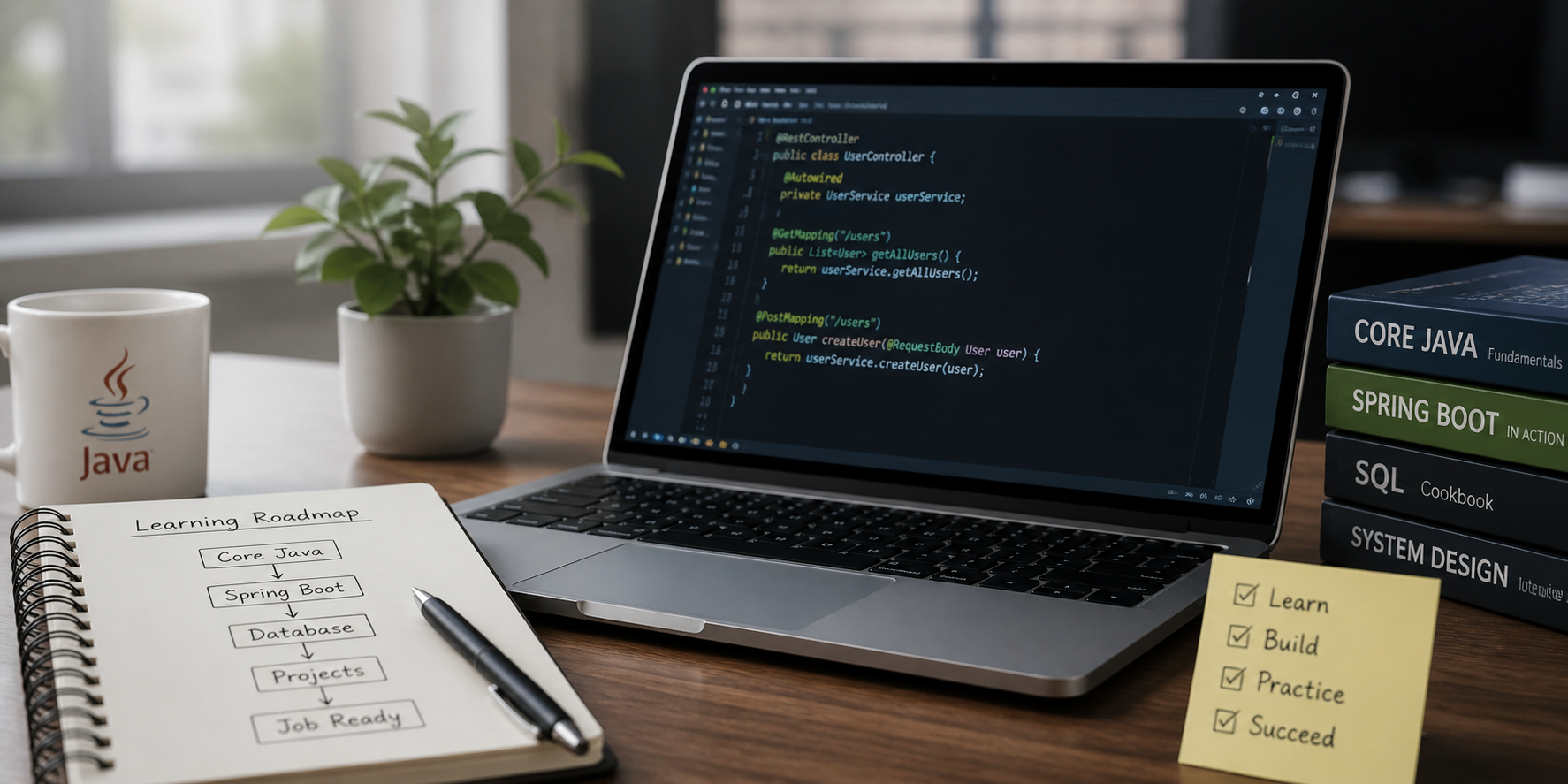
Step-by-Step Roadmap to Become a Job-Ready Java Developer
If you are planning to build a career in IT, enrolling in a full stack development course can be one of the smartest decisions you make

Introduction
If you are planning to build a career in IT, enrolling in a full stack development course can be one of the smartest decisions you make. Many beginners feel overwhelmed at the start—there are too many technologies, too many tutorials, and no clear direction.
This is where a structured roadmap becomes essential. Instead of randomly learning topics, you need a step-by-step approach that helps you build real skills and become job-ready.
For students exploring a Java training program, following a clear path can save months of confusion and help you focus on what truly matters.
Why Java is Still a Strong Career Choice
Java has been a dominant programming language for years, and its demand continues to grow. It is widely used in:
Enterprise-level applications
Banking and financial systems
Backend web development
Large-scale distributed systems
The biggest advantage of choosing job-oriented Java training is that it prepares you for real-world roles where companies need stable and scalable solutions.
Unlike short-term trending technologies, Java offers long-term career stability.
Step-by-Step Learning Roadmap
To become a job-ready developer, you need to follow a structured learning process.
Step 1: Master Core Java
Start with the basics:
Variables, loops, conditions
Object-Oriented Programming (OOP)
Arrays and collections
These fundamentals form the base of everything you will learn later.
Step 2: Learn Advanced Java
Once your basics are clear, move to advanced topics:
JDBC (database connectivity)
Exception handling
Multithreading basics
This stage helps you understand how backend systems actually work.
Step 3: Learn Spring Boot
Spring Boot is one of the most important frameworks for backend development.
Focus on:
Building REST APIs
Understanding application architecture
Dependency injection
This is where your learning becomes practical and industry-relevant.
Step 4: Understand Databases
Every application needs data management. Learn:
SQL queries
Table relationships
CRUD operations
Database knowledge is essential for backend development roles.
Step 5: Learn Basic Frontend
Even if your goal is backend development, having frontend knowledge gives you an advantage.
Start with:
HTML
CSS
JavaScript
This helps you understand how complete applications work.
Tools You Must Learn
Apart from programming, you should also be comfortable with tools used in real projects:
IntelliJ or Eclipse
VS Code
Git & GitHub
Postman
MySQL Workbench
Learning these tools improves your workflow and prepares you for real-world development environments.
Common Mistakes to Avoid
Many students struggle not because they lack ability, but because they follow the wrong approach.
Avoid these common mistakes:
Watching tutorials without practicing
Not building projects
Ignoring core concepts
Switching technologies too often
How Projects Make You Job-Ready
Projects are the most important part of your learning journey.
They help you:
Apply theoretical concepts
Build confidence
Demonstrate skills during interviews
Start with small projects like:
Login systems
CRUD applications
Then move to advanced ones like:
E-commerce platforms
Full stack applications
Smart Learning Strategy
To become job-ready efficiently:
Study consistently (3–4 hours daily)
Combine theory with hands-on coding
Revise concepts regularly
Practice explaining what you learn
Consistency matters more than speed.
Students who follow structured job-oriented Java training programs usually progress faster because they avoid unnecessary confusion.
Conclusion
Becoming a job-ready Java developer is not about learning everything—it’s about learning the right things in the right order.
A structured roadmap, consistent practice, and real project experience are the key factors that make the difference.
If you are exploring a Java training program, IT Shaala offers practical learning, real-time projects, and placement-focused guidance to help you build a strong foundation and confidently step into the IT industry.
FAQs
Q1. How long does it take to become a Java developer?
It usually takes 4–6 months with consistent practice and structured learning.
Q2. Do I need a technical degree?
No, most companies focus on your skills and project experience.
Q3. How many hours should I study daily?
3–4 hours of focused practice is ideal.
Q4. Are projects necessary for getting a job?
Yes, projects help you demonstrate your practical knowledge.
Q5. What is the best way to start learning Java?
Start with fundamentals, follow a roadmap, and build projects consistently.
Level up your tech career
Did you find this article helpful? Join IT Shaala's advanced bootcamps to build real-world applications and land your dream job.
Explore Our Courses